Skip to product information
1 of 1

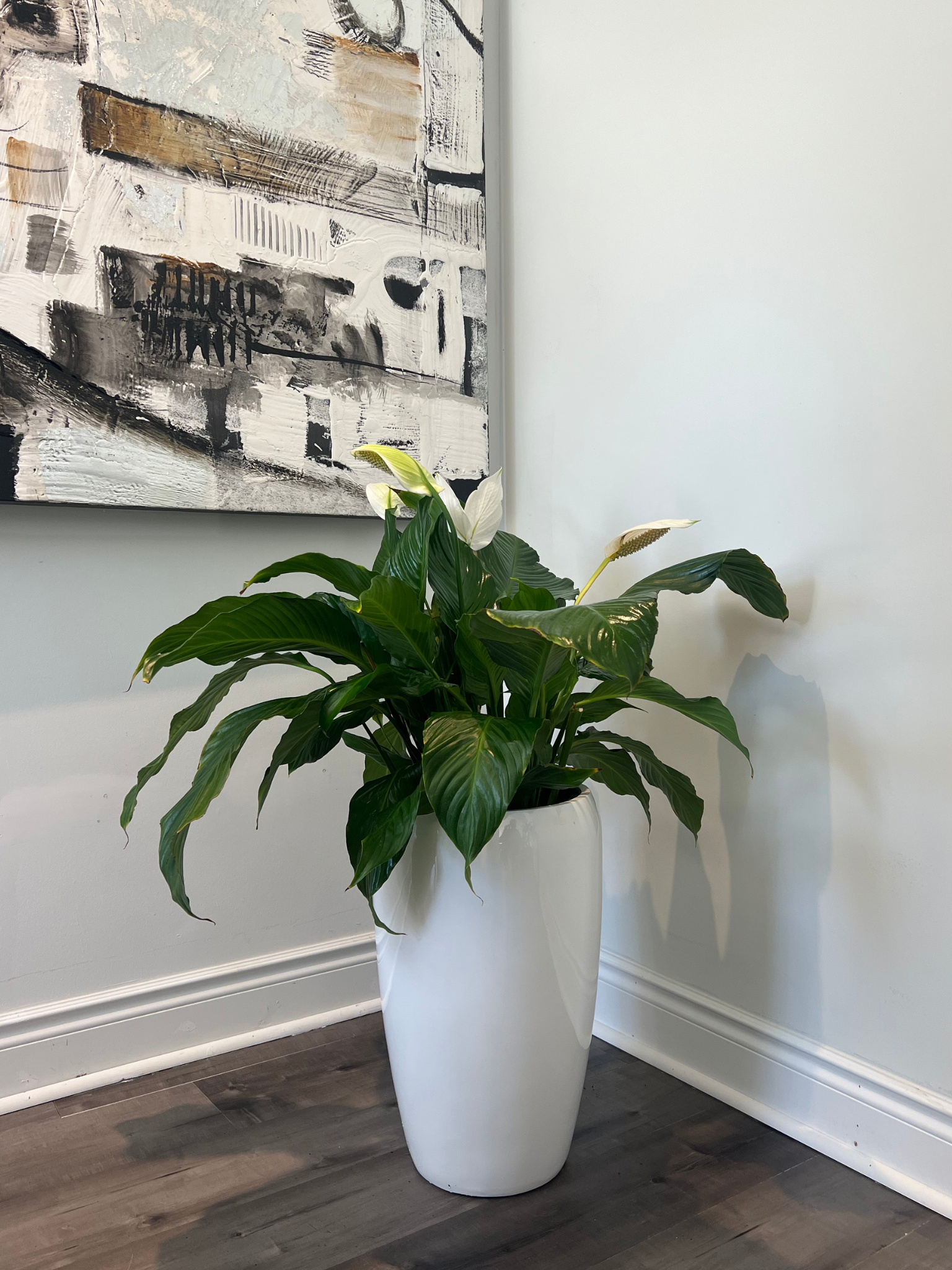
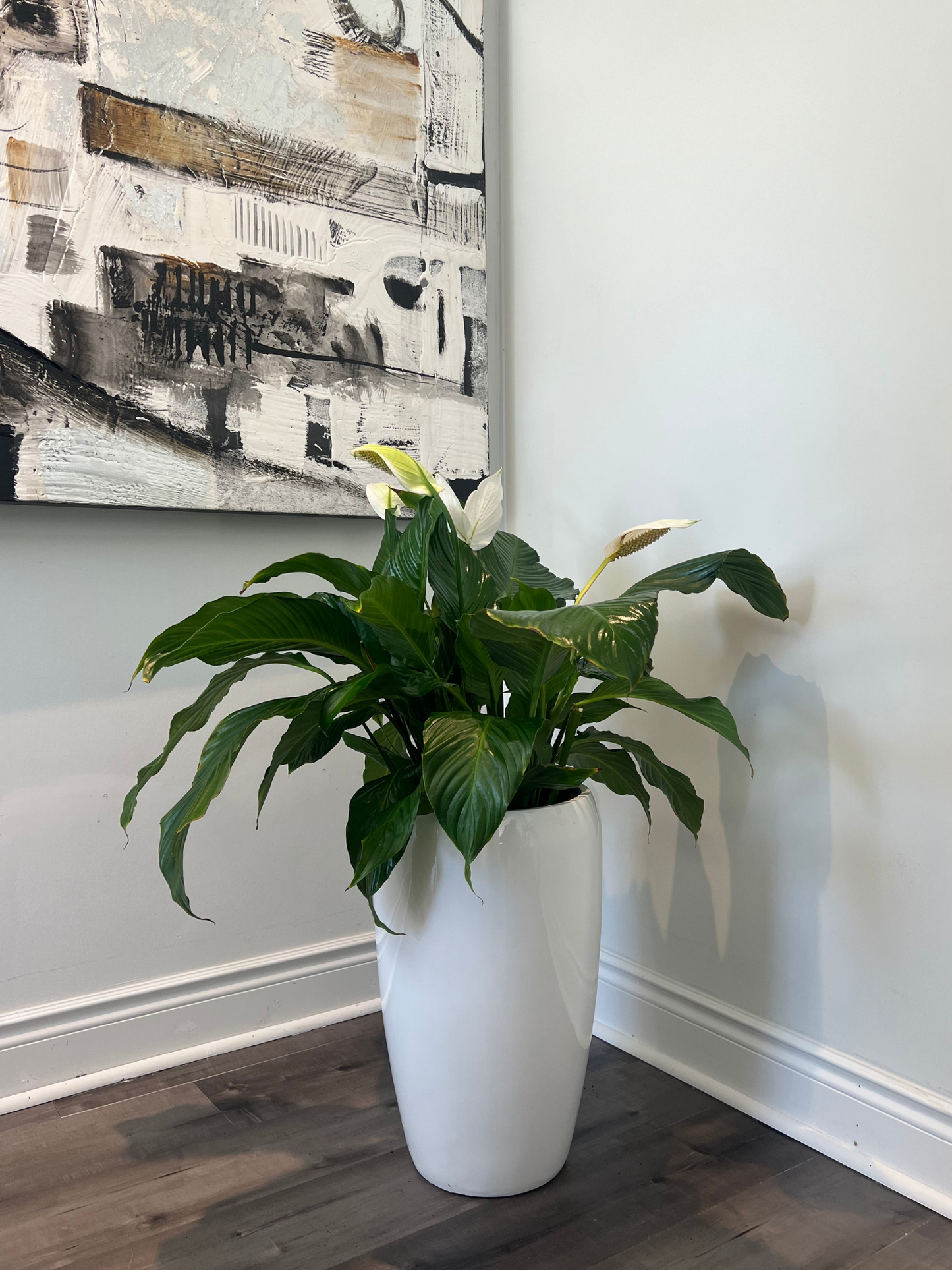
Peace Lilly in large fibreglass pot (white/black)

Peace Lilly in large fibreglass pot (white/black)

Regular price $275.00 CAD
Regular price Sale price $275.00 CAD
Sale Sold out
Shipping calculated at checkout.
Quantity
Flat rate shipping on all orders
Customers rate us 4.5/5
Packaged securely for safe arrival
Over 150.000 green amigos sold!
3 month happy plant guarantee

Learn how to care for a peace lily, one of the most popular indoor plants. These beautiful houseplants are fairly easy to grow, but it’s important to know how often to water peace lilies and what to do if their leaves droop or turn yellow. Plus, find tips on how to repot your peace lily to keep it happy!

About Peace Lilies

Peace lilies are not true lilies. They are tropical, evergreen plants in the Arum family, native to tropical Central and South America. These plants thrive on the forest floor, where they receive dappled sunlight and consistent moisture and humidity. Replicating these conditions in the home is the key to getting your peace lily to be happy and healthy.

With enough light, peace lilies produce white to off-white flowers starting in the early summer, continuing to bloom throughout the year in the right conditions. 

Most household varieties of peace lily grow up to 16 inches tall, but larger outdoor cultivars can have leaves that reach up to 6 feet in height. Peace lilies are not cold-hardy plants, so they can only be grown outdoors in warm, humid climates (USDA Zones 10, 11).

Is the Peace Lily Toxic to Cats and Dogs?

Yes, peace lilies are mildly toxic. All parts of the peace lily plant contain calcium oxalate—a substance that may cause stomach and respiratory irritation if ingested in large amounts. Keep peace lilies out of reach of small children and pets who might chew on the plant. Other common plants that contain calcium oxalate include philodendrons, daffodils, true lilies, and hyacinths.

Peace lily on table. Photo by izzzy71/Getty Images
Photo by izzzy71/Getty Images
PLANTING

How to Plant, Repot, and Divide Peace Lilies

  • Plant or replant your lilies in a container that is twice as large as the root ball with well-draining, all-purpose potting soil. The soil should be able to hold moisture and dry out slowly over time. Peace lilies don’t like to dry out entirely, but they also won’t do well if kept in soil that’s constantly wet, as this fosters root rot fungus.
  • Repotting the plant every few years in the spring is good for the peace lily, as it will appreciate the refreshed soil.
  • Eventually, the peace lily may grow too large for its pot, at which point it can be divided. Remove the plant from its pot and split it into smaller plants, being sure to leave several leaves per clump. Peace lilies grow from rhizomes, so it can tolerate a bit of tough treatment

Properties

View full details
Help Center

Frequently Asked Questions:

You might have some questions about ordering plants online. Makes total sense! We've combined the most common questions (and answers) below

We are experts at packaging plants for a safe plant delivery. Our boxes have a clever design that ensures plants stay snuggly in one place throughout their journey to your home.

We make every effort to ensure the plant you receive matches very closely to the plant you see on our site. Always remember that these green amigo's are living creatures, each with their unique style. Height differences between 5-10cm may apply. Let's just say we don't always look like our profile picture either!

If you're new to plant parenthood, you should definitely try our Plantsome App. The app makes light work of plant care by sending water and fertilizer alerts to your phone exactly when your plants need it. #Easy!

Are your beloved green amigo's not in good shape? Worry not, Plantsome provides a 3-month happy plant guarantee on all of its plants. Read more about it here.


How to Keep Your Plant Thriving

Follow these guidelines for healthy and beautiful growth.

Light Requirements

Light Requirements

Bright, indirect light is ideal. Avoid direct sunlight which can scorch leaves. Can tolerate low light but growth will slow.

Watering Schedule

Watering Schedule

Water when top 2 inches of soil are dry. Typically once a week in summer, every 2 weeks in winter. Avoid overwatering.

Temperature & Humidity

Temperature & Humidity

Prefers 65–85°F. Higher humidity (50–60%) promotes larger leaves. Mist regularly or use a humidifier.

Pruning & Maintenance

Pruning & Maintenance

Trim yellow or damaged leaves at the base. Wipe leaves monthly with a damp cloth to remove dust.

Pest Prevention

Pest Prevention

Check regularly for spider mites and mealybugs. Treat with neem oil spray if pests are detected.

Fertilizing

Fertilizing

Feed monthly during growing season (spring–summer) with balanced liquid fertilizer. Skip in winter months.

Rotate your Monstera a quarter turn every week to ensure even growth. The plant naturally leans toward the light source, so rotating helps maintain a balanced, symmetrical shape.

CUSTOMER LOVE

What Plant Parents Say

4.9/5 from 2,000+ reviews
““Absolutely love my new Monstera! It arrived in perfect condition and has been thriving for months. The care guide they included was so helpful.””
SM
Sarah Mitchell
Toronto, ON
“““Best online plant shopping experience ever. The packaging was eco-friendly and my fiddle leaf fig looks even better in person. Already ordered three more!”””
JC
James Chen
Vancouver, BC
““I was nervous about ordering plants online, but Plant Club exceeded all expectations. Customer service was amazing when I had questions about plant care.”””
EP
Emily Parker
Montreal, QC
“Lorem ipsum dolor sit amet, consectetur adipiscing elit. Integer nec odio. Praesent libero.”
PC
Lorem Ipsum
Patiala, PB
“Lorem ipsum dolor sit amet, consectetur adipiscing elit. Integer nec odio. Praesent libero.”
PC
Lorem Ipsum
Patiala, PB
Peace Lilly in large fibreglass pot (white/black)

Peace Lilly in large fibreglass pot (white/black)

$275.00