


Frequently asked questions
You might have some questions about ordering plants online. Makes total sense! We've combined the most common questions (and answers) below
Every order is packed in a box built to hold the pot steady and keep the soil where it belongs. Orders ship from our Milton, Ontario location, so most of Canada is only a few days away. In the colder months you can add a 96-hour heat pack at checkout for extra protection in transit.
Very close, but not identical. These are living things and no two grow exactly the same way. You'll get the same variety, size and health as the plant shown, with natural variation in shape and leaf count. Height can differ by an inch or two in either direction.
Start with something forgiving. Snake plants, ZZ plants, pothos and lucky bamboo all put up with low light and irregular watering, and they're what we point most first-time plant parents toward. Every listing tells you the light, water and pet-safety needs before you buy — and if you're still unsure, message us and we'll suggest something that suits your space.
Tell us within 14 days and we'll make it right with a replacement or a refund. Email a photo to hello@plantclub.ca with your order number — that's usually all we need. Full terms are on our refund policy page.
How to Keep Your Plant Thriving
Follow these guidelines for healthy and beautiful growth.

Light Requirements
Bright, indirect light is ideal. Avoid direct sunlight which can scorch leaves. Can tolerate low light but growth will slow.

Watering Schedule
Water when top 2 inches of soil are dry. Typically once a week in summer, every 2 weeks in winter. Avoid overwatering.

Temperature & Humidity
Prefers 65–85°F. Higher humidity (50–60%) promotes larger leaves. Mist regularly or use a humidifier.

Pruning & Maintenance
Trim yellow or damaged leaves at the base. Wipe leaves monthly with a damp cloth to remove dust.

Pest Prevention
Check regularly for spider mites and mealybugs. Treat with neem oil spray if pests are detected.

Fertilizing
Feed monthly during growing season (spring–summer) with balanced liquid fertilizer. Skip in winter months.

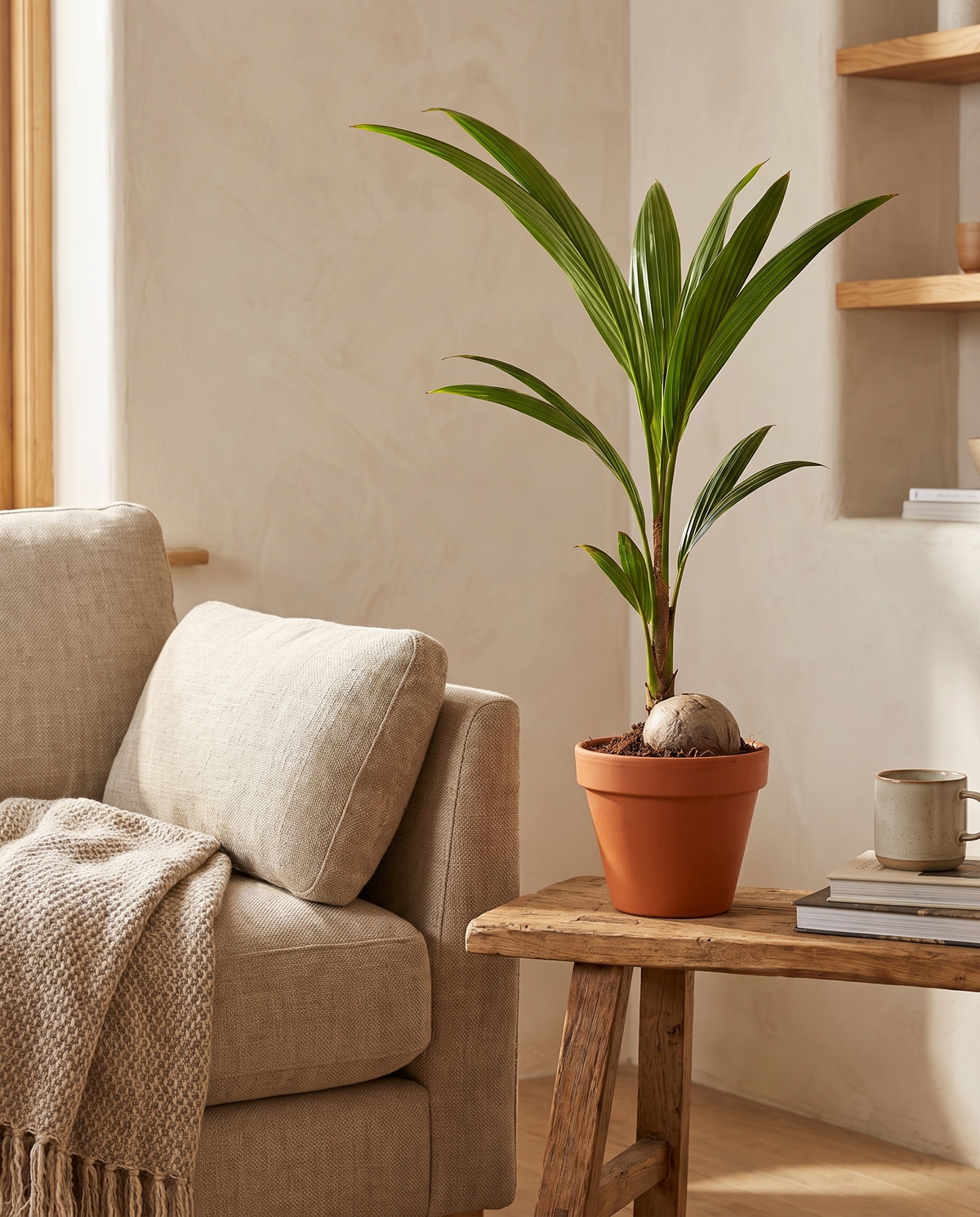
Coconut Plant (Cocos nucifera) 10" Grower Container